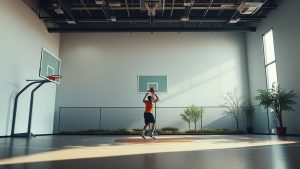
Picture the classic NBA center: a giant parked under the rim, rarely straying more than a few feet from the basket, waiting to swat anything that came near. That image is gone. Today you’ll see the same big man standing 25 feet from the hoop, sliding his feet in front of a point guard, and pointing teammates into position like a coach on the floor.
Modern NBA center defensive responsibilities explained simply come down to four jobs: protect the rim, cover the pick-and-roll, switch onto smaller players when needed, and communicate the whole scheme. The center is no longer just a shot-blocker. He’s a decision-maker who has to read the play, pick his poison, and live with the result.
The job expanded because offenses did. Spacing, five-out lineups, and endless ball screens drag bigs away from the paint and force them to make split-second choices in open space. A center who can’t think on his feet gets hunted possession after possession. That’s why the role looks so different from the paint-camping days.
Rim Protection: Still the Center's First Job
You can teach a center to switch, and you can drill him on drop coverage until his footwork is automatic. What you can't easily teach is the instinct to be the last line of defense, and that's why rim protection remains the non-negotiable part of the job. Everything else in the modern center's defensive role is built on top of it. If a big man can't protect the paint, the rest of the scheme usually falls apart.
What has changed is where the job starts. The old-school center waited at the rim and met drivers there. Now he often begins the possession near the level of the screen, twenty feet from the basket, then has to retreat and still be a factor when the ball reaches the rim. That two-part responsibility — show some resistance up high, recover in time to contest down low — is what separates good modern defenders from big men who only look the part on paper.
Verticality: Contesting Without Fouling
Verticality is the rule that lets a defender go straight up with his arms extended and absorb contact without being called for a foul, provided he stays in his own vertical space and doesn't swing down through the shooter. For centers, it's the difference between being a deterrent and being a liability in foul trouble. The best rim protectors don't jump at every pump fake. They hold their ground, keep their chest in front of the driver, and time the jump so their hands are up at the moment of release.
This is where length and timing beat bulk. A center who can stay balanced and contest vertically can defend the rim without leaving his feet early, and he stays out of foul trouble. The heavy, ground-bound enforcer who simply bodied drivers is a rarer sight now, partly because officials call more of that contact and partly because offenses attack those bigs in space.
Help Defense and the Art of Arriving on Time
Most rim protection in the modern game happens as help, not as a one-on-one assignment. The center is usually the weak-side safety, reading the drive from across the floor and rotating over to contest. The hard part is the timing. Arrive too early and you give up an easy kick-out three. Arrive too late and it's a layup. The center has to split the difference, often with a short closeout back toward a shooter after the drive is stopped.
That tension explains why coaches talk about rim protection as a decision, not just a skill. A big man who blocks two shots but leaves a corner shooter open four times has probably hurt his team. The best help defenders pick their spots — they contest the shot that matters and recover to the shooter they can still reach.
Why Blocked-Shot Numbers Don't Tell the Story
Counting blocks is the easy way to talk about rim protection, and it's an incomplete one. A center who alters shots, forces drivers to pick up their dribble, or makes a guard think twice about attacking the paint can be hugely valuable without recording a single block. Deterrence doesn't show up in the box score. Positioning does the quiet work: standing in the right spot, keeping the ball-handler on a predictable path, and being close enough that the shot becomes a tough one.
Watch a good defensive center for a full possession and you'll notice he's often not near the ball. He's shading toward the driver, one eye on his man, ready to slide over. That awareness is the foundation the rest of his modern responsibilities sit on. If you want to understand the expanded job, start here: the modern NBA center defensive responsibilities explained in any scheme begin with protecting the rim, and everything else is layered on top.
Pick-and-Roll Coverage: Drop, Switch, or Hedge
Every modern NBA center defensive responsibility starts with the same question on most possessions: what do you do when a screen arrives? The pick-and-roll is the engine of most half-court offenses, and the big man is usually the player who has to solve it. He can’t just stand near the rim and wait. He has to read the ball handler, the screener, and his own guard’s position, then pick a coverage that fits the scouting report. Three coverages come up again and again: drop, hedge and recover, and switch.
Drop Coverage: Protect the Rim, Live With the Pull-Up
In drop coverage, the center backs up toward the paint as the screen is set. His job is to stay between the ball handler and the rim while his guard fights over the top of the screen to recover. The big man keeps his hips low and his hands active, ready to contest a drive or a lob to the rolling screener. He is essentially guarding two threats at once: the ball handler turning the corner and the big man diving to the rim.
Drop is popular because it keeps the center near the basket, where he is most valuable. It protects against layups and dunks and keeps the defensive big in rebounding position. The cost is space. The ball handler often walks into an open pull-up jumper from the mid-range or the top of the arc, and a confident shooter will take that shot all night. Centers with slow feet get exposed if the guard can’t get back over the screen quickly.
Hedge and Recover: Step Out, Then Scramble Back
A hedge is a temporary show. The center steps out hard toward the ball handler to slow him down, buying his guard time to get back in front. Then he scrambles back to his own man, usually the screener rolling to the rim. Timing matters more here than in any other coverage. Step out too far and the ball handler splits the hedge or hits the roller behind you. Step out too softly and you’ve done nothing at all.
Teams use hedges against guards who punish drop coverage with pull-up jumpers. It’s also a way to disrupt rhythm and force the ball handler to pick up his dribble. The trade-off is the recovery. A center who hedges has to sprint back, find the roller, and re-establish position before the pass arrives. Big men with good mobility and anticipation make this look easy; slower centers get caught in no man’s land.
Switch: Take the Ball Handler and Live With the Mismatch
Switching means the center simply takes the ball handler and his guard takes the screener. No fighting over screens, no recovery sprints. The coverage is clean and hard to exploit with a quick pass, which is why switching has become so common against teams that run a lot of dribble handoffs and off-ball movement. The center ends up on an island, guarding a smaller player in space.
Surviving there is about feet and discipline. The center has to slide his feet, stay low, and avoid reaching. He gives up a step of cushion to guard the drive, then contests the jumper with a late hand up. The physical demands are real: chasing guards around the perimeter drains energy and invites fouls. The mental side is just as tough, because a switch can happen at any moment and the big man has to communicate it instantly.
The Trade-Offs: What Each Coverage Gives Up
No coverage is free. Drop concedes pull-up jumpers and lets good shooters get comfortable. Switching concedes post-ups, because a smaller guard often ends up on the opposing big, and it can cost defensive rebounds when the center is pulled away from the paint. Hedging concedes the roll pass if the recovery is late. Coaches pick based on the opponent: drop against poor shooters, switch against teams with limited post threats, hedge against guards who live on the pull-up.
The best centers don’t just execute one coverage. They read the possession and adjust, sometimes within the same game. That flexibility is a big part of why the modern NBA center defensive responsibilities explained above look nothing like the old paint-camping job.
Switching on the Perimeter: When the Center Leaves the Paint
Watch a modern possession closely and you’ll see the center standing 25 feet from the basket, crouched in front of a point guard. That image barely existed a generation ago. Switching has gone from a niche tactic to a core part of the modern NBA center’s defensive responsibilities, and it’s worth understanding why teams accept the trade-off.
Why Switching Is More Common
Offenses are built to hunt mismatches. A team will run screen after screen until your center is guarding their quickest ball-handler in open space. If the defense fights through every screen, it eventually gets caught in rotation and gives up an open look. Switching eliminates that scramble: two defenders simply trade assignments and the play stays covered. For a coach, it’s often the safer choice against teams that punish help rotations with quick ball movement and shooting.
Technique: Moving Feet, Staying Low, Contesting Without Reaching
A center on an island has to survive with footwork, not hands. The stance is lower and wider than in the paint, with short choppy slides instead of long lunges. Reaching for a steal is usually a mistake; it puts the big off balance and opens a driving lane. The goal is to contain the ball-handler, stay in front, and force a contested pull-up or a pass. Contesting the jumper comes last, with a high hand up but feet still under control.
Communication and Teamwork
Switching only works when everyone knows it’s happening. The center often calls the switch out loud, then has to find the screener rolling to the rim and recover to him before the pass arrives. Teammates must also be ready to help if the guard beats the big off the dribble, which means the center is relying on the same communication he’s expected to provide. In practice, a switch is less a one-on-one duel than a coordinated handoff between five players.
The Cost: Rebounding and Rim Protection Suffer
There’s a real price to pulling the center away from the basket. While he’s chasing a guard on the perimeter, nobody is protecting the rim, and offensive rebounds become easier for the other team. A missed shot means the big is out of position to box out. Coaches weigh this constantly, which is why some centers switch everything and others drop back depending on the matchup and the score. The best modern bigs manage the risk by picking their spots and recovering hard to the paint.
Communication: The Center as Defensive Quarterback
Watch a good defensive center for a full possession and you’ll notice his mouth moves as much as his feet. He’s the last line of the defense, which means he sees the whole picture: the ball, all four teammates, every off-ball cutter. That vantage point makes him the natural quarterback, and the modern NBA center defensive responsibilities explained in this section are the ones fans rarely see on a highlight reel. The talking is the job.
Calling Out Screens and Coverages Before They Happen
The most basic duty is early warning. A center must spot an incoming ball screen and shout it before his guard gets blindsided, usually naming the side (“screen right”) and the coverage (“drop” or “switch”). Timing matters more than volume. A call that arrives a half-second late is just noise, because the guard has already committed his hips and can’t adjust. Good centers read the offense’s alignment and anticipate the screen rather than reacting to contact. That’s why you’ll see a big pointing and yelling while the ball is still being walked up the floor.
Organizing Help and Rotations
Rim protection is a team effort built on a chain of rotations, and the center runs the chain. When he leaves the paint to challenge a drive, someone must tag the roller and someone else must cover the corner. He directs that traffic in real time, telling wings to sink in, pointing at the weak-side shooter, and confirming who’s got the backside. Without that organization, help defense becomes guesswork, and two defenders end up guarding the same man while a shooter stands alone.
Being the Eyes Behind the Play
Guards defend with their chests to the ball and often can’t see what’s developing behind them. The center can. He’s the one calling out a backdoor cut, a pin-down on the far side, or a big slipping to the rim. This is where communication overlaps with awareness: he has to process the whole floor and translate it into short, clear instructions. “Backdoor!” or “slipping!” does more than a paragraph of explanation, and the best bigs keep their vocabulary simple so nobody has to think twice.
Keeping Composure When the Defense Breaks Down
Every defense gets scrambled eventually. A blown switch, a lucky bounce, a broken play. The center’s reaction sets the tone for everyone else. Panic spreads, and so does calm. A composed big resets the group, points to matchups, and buys his teammates a second to recover rather than chasing the ball himself and leaving the rim naked. That steadying presence is a defensive skill in its own right, and coaches value it as much as shot-blocking.
Why Communication Is a Skill That Can Be Learned
Quiet players aren’t doomed. Talking on defense is a habit built through repetition, like any other footwork drill. Teams practise coverages out loud in training, and young centers are often graded on their calls as much as their positioning. Confidence grows once a player knows the scheme cold, because you can’t direct a rotation you don’t understand. Personality helps, but knowledge and reps matter more, which is why plenty of reserved bigs become the loudest voice on the floor by their mid-twenties.
The Modern Center: From Paint-Camper to Decision-Maker
Go back to that old picture of a center parked under the rim, and it looks almost quaint now. The modern center still protects the basket, but he also drops into pick-and-roll coverage, switches onto a guard when the matchup demands it, and talks the whole defense through a possession like a quarterback with a headset. The paint is his home base, not his whole world.
And the job keeps moving. As offenses add more five-out looks and quicker screening actions, centers are being asked to read and react faster than ever, often guarding in space while still owning the rim. The best ones are less like stationary shot-blockers and more like defensive coordinators who happen to be seven feet tall.