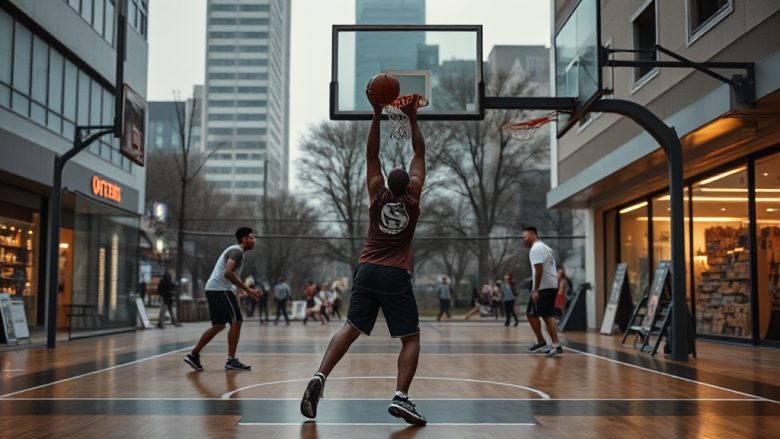
Most big men come to shooting late. By the time anyone asks you to step behind the arc, you’ve spent years finishing around the rim, setting screens and crashing the glass, so your form, footwork and release were never built for range. That’s not a talent problem. It’s a training-history problem, and it’s fixable.
The best drills for big men to develop a three-point shot follow one rule: start close to the basket and only move back once the mechanics hold. Chasing distance on a broken base just teaches you to miss from farther away. This article gives you five progressive drills, each with sets, reps and form cues, plus a weekly plan for fitting the work around team practice and lifting.
The challenge is real. Long levers take longer to sync, and most tall players never had a shooting coach early enough to groove a repeatable release. So the drills ahead build outward from close range, adding distance only when your balance, elbow and landing stay the same shot after shot.
Why Big Men Need Different Shooting Drills
Copying a guard’s shooting workout rarely works for a tall player. The best drills for big men to develop a three-point shot have to account for longer limbs, a different release window and years of muscle memory built close to the rim. Here is what actually changes when you are 6’8″ and trying to stretch your range.
Long levers mean a slower, harder-to-repeat release
Long arms and legs take longer to load and unfold, so the shot has more moving parts and more places to break down. That makes tempo drills more valuable than raw volume. Ten focused reps at a consistent rhythm beat fifty rushed ones.
Height changes the arc
Tall players often flatten their shot because the rim feels close, and a flat arc dies on the back iron. Drills should push a higher release point and a steeper entry angle, with cues like “shoot over a hand” and “finish above the eyebrow.”
Footwork and balance
A wide base gives stability, but it can also lock the hips. Build a staggered stance, then practise turning square out of post catches so the feet are set before the ball arrives. Balance first, then range.
Strength trade-off
Upper-body bulk can pull the shot short, especially late in games. The legs have to do more of the work, so drills should include dip-and-drive reps that load the lower body and keep the arms quiet.
The rule that governs every drill
Distance only increases when the previous range is repeatable. If a player makes fewer than roughly seven of ten from a spot with clean form, they stay there. Move back only when the mechanics hold.
Form Cues to Lock In Before Adding Distance
Before you chase range, spend two weeks checking these five things in a mirror or on your phone. Film from the front and the side. If any of them break down, fix it at the free-throw line before you move back.
Elbow Under the Ball, Aligned with the Hoop
The shooting elbow should sit directly beneath the ball, pointing at the rim rather than flaring out to the side. A flared elbow turns the shot into a push and adds side spin. Check your front view: if the elbow drifts past your shoulder line, bring it in.
Set Point Above the Forehead with the Wrist Cocked
Get the ball to a set point above your forehead with the wrist cocked back so the fingers point up. From there the release is a snap, not a shove. Big men often rush this because they’re used to shooting over smaller defenders close to the rim; at range, the snap does the work.
Land in the Same Footprint You Jumped From
Jump and land in the same spot. Drifting sideways or forward on the landing means the shot is being thrown rather than shot. Mark your feet with tape and check the film.
Sideways Drift Signals a Strength Problem
If you consistently drift, don’t add distance. It’s usually a leg or core strength issue, not a range issue. Build the base first.
Eyes on the Back Rim and a Consistent Dip
Pick the back rim and hold it. Use the same short dip into the shot every time, so the legs load the same way on every rep. Inconsistent dip equals inconsistent range.
Best Drills for Big Men to Develop a Three-Point Shot
These five drills run in order of difficulty. Start at the top and only move on when you can repeat the mechanics without thinking about them. Each one has a clear job, so don’t skip ahead just because the later drills look more fun.
1. Close-Range Form Shooting
Purpose: Rebuild a clean release from the ground up. Setup: Five spots inside the paint — both blocks, both elbows, and the middle of the lane. Take 10 makes from each spot, shooting one-handed or with your guide hand barely touching the ball. Focus on a high finish and a held follow-through. Who it suits: Anyone whose shot looks different every time, or who hasn’t shot seriously since high school.
2. Elbow-to-Wing Progression
Purpose: Add distance in controlled steps. Setup: Start at the elbow, take one dribble into a shot, and make five. Move back a step and repeat, working from the elbow out to the wing and eventually the three-point line. Keep the same dip and release at every distance — if the form changes, move back in. Sets and reps: Three sets per session, five makes per set. Who it suits: Players who can shoot close but lose rhythm the moment they step out.
3. Chair Squeeze Catch-and-Shoot
Purpose: Isolate the upper body and kill the habit of pushing the ball from your chest. Setup: Sit on a chair or bench, or shoot with your legs restricted, and catch-and-shoot from just outside the paint. With no leg drive to rely on, you have to use a proper wrist snap and arc. Sets and reps: Four sets of 10. Who it suits: Big men whose shot looks like a shove rather than a shot.
4. Pick-and-Pop Reps
Purpose: Practise the shot you’ll actually take in games. Setup: Have a passer simulate a screen exit — you set a screen, pop to the top or wing, catch, and shoot. Work the top of the key and both wings. Sets and reps: Five sets of eight from the top and each wing. Who it suits: Players ready to translate range into real possessions.
5. Fatigue Three-Point Sets
Purpose: Keep your shot intact when your legs are gone. Setup: Five spots around the arc, 10 threes per spot, with a short sprint between spots. Track makes at each spot so you can see where the shot breaks down. Who it suits: Players whose shot falls apart late in games.
A Weekly Plan for Building Range
Three Shooting Days, With Rest Between
Run your best drills for big men to develop a three-point shot on Monday, Wednesday and Friday, so every heavy shooting day sits next to a rest day. That spacing matters more than volume. On team practice days, do ten to fifteen minutes of low-volume form work only: close-range repetitions, no chasing range, no fatigue.
Open With Form, Close With Fatigue Once
Every session starts with form shooting from inside the paint, working outward. Finish with fatigue sets just once a week, usually Friday, because tired reps are where mechanics collapse. The other two sessions end fresh, with your best-looking shot.
Progress Only After Two Clean Sessions
Move back one step only after two consecutive sessions at 70 percent or better from your current range. Not one good day. Two. If you drop below that, stay put for another week rather than pushing back.
Keep First-Month Three-Point Volume Moderate
Cap three-point attempts at roughly thirty to forty per session in month one. Your shoulder and elbow aren’t conditioned for that volume yet, and tendinitis will cost you more weeks than patience ever will.
Common Mistakes That Stall a Big Man's Range
Most stalled three-point projects fail for the same handful of reasons, and every one of them is visible on video if you know where to look.
Chasing the Line Too Soon
The most common error is stepping back before the shot holds at the free-throw line. When distance outruns strength, the wrist snaps early and the release collapses into a push from the chest, so the ball leaves flat and short. Spot it by filming from the side: if the elbow drops below the ball or the guide hand flies off before release, move back in.
Shooting Tired Reps
Fatigue turns a good set into a rehearsal of bad habits. Once the legs stop driving and the shot starts falling short, stop the set. Twenty clean makes beat sixty sloppy attempts every time, and the last five reps of any drill should look like the first five.
Ignoring the Legs
Big men often try to muscle long shots with arms and shoulders. Range comes from a dip and a smooth transfer upward through the hips and knees. If the arc is flat and the shoulders burn after a set, the legs are doing too little.
Skipping Video Review
You cannot feel drift, only see it. A monthly side-on and front-on clip reveals a lowering release point, a fading landing or a flat arc long before it becomes permanent. Review it the same day, while the session is fresh.
Build Range From the Free-Throw Line Outward
Range is built from the free-throw line outward, not from the logo inward. If you skip ahead to deep threes before the mechanics hold at 15 feet, you’ll groove compensations that show up as a flat arc and a drifting landing. Go back to the weekly plan whenever progress stalls: it sequences the best drills for big men to develop a three-point shot so each step earns the next.
Film one session a month, shot from the side and from behind. Check that your release point and landing stay the same as you move back a step. When they don’t, drop down a distance and rebuild.